Golden Retriever Surgery Costs: A Complete 2026 Breakdown
The surgery cost ladder for goldens
Rough 2026 pricing at general practices and specialty centers, adult golden weight range: spay $400–$700; neuter $300–$550; mass/tumor excision (single, benign) $800–$2,500; mass excision with pathology and margins (suspected malignancy) $1,500–$5,000; foreign-body surgery (enterotomy or gastrotomy) $2,500–$6,000; splenectomy $3,500–$6,500; cruciate repair (TPLO) $4,500–$6,500 per knee; hip surgery, FHO $2,500–$4,500 per side, THR $6,000–$8,500 per side; GDV surgery (bloat) with pexy and ICU $4,000–$8,000; cystotomy for bladder stones $1,500–$3,000; laryngeal tie-back for laryngeal paralysis (senior goldens) $3,500–$5,500.
How reimbursement math actually works
On a $500 deductible / 80% reimbursement / $10K annual limit plan, a $6,000 TPLO surgery flows as: you pay the full $6,000 at the vet's office; you submit invoice + records to your insurer; the insurer confirms the procedure is typically covered and not pre-existing; they subtract your $500 annual deductible (once per policy year, then done for the year); of the remaining $5,500 they reimburse 80% = $4,400; you receive direct deposit within 5–14 days. Net out-of-pocket: $1,600 on a $6,000 surgery. If a second $3,000 procedure hits the same year, the deductible is already met, so you get 80% of $3,000 = $2,400 reimbursed.Specialty vs general practice, when it matters
General practices handle spay/neuter, mass excisions (usually), foreign-body surgery, and routine soft-tissue work. Specialty referral matters for: cruciate repair (TPLO requires specialty orthopedic training), hip replacement (specialist only), oncology surgery on aggressive tumors requiring wide margins, thoracic/cardiac surgery, and any case with anesthesia risk factors. Specialty pricing runs 30–60% higher than general practice for equivalent procedures, but the outcome differential on complex surgeries (particularly orthopedic) is significant enough that most insurance policies pay the specialty rate without pushback.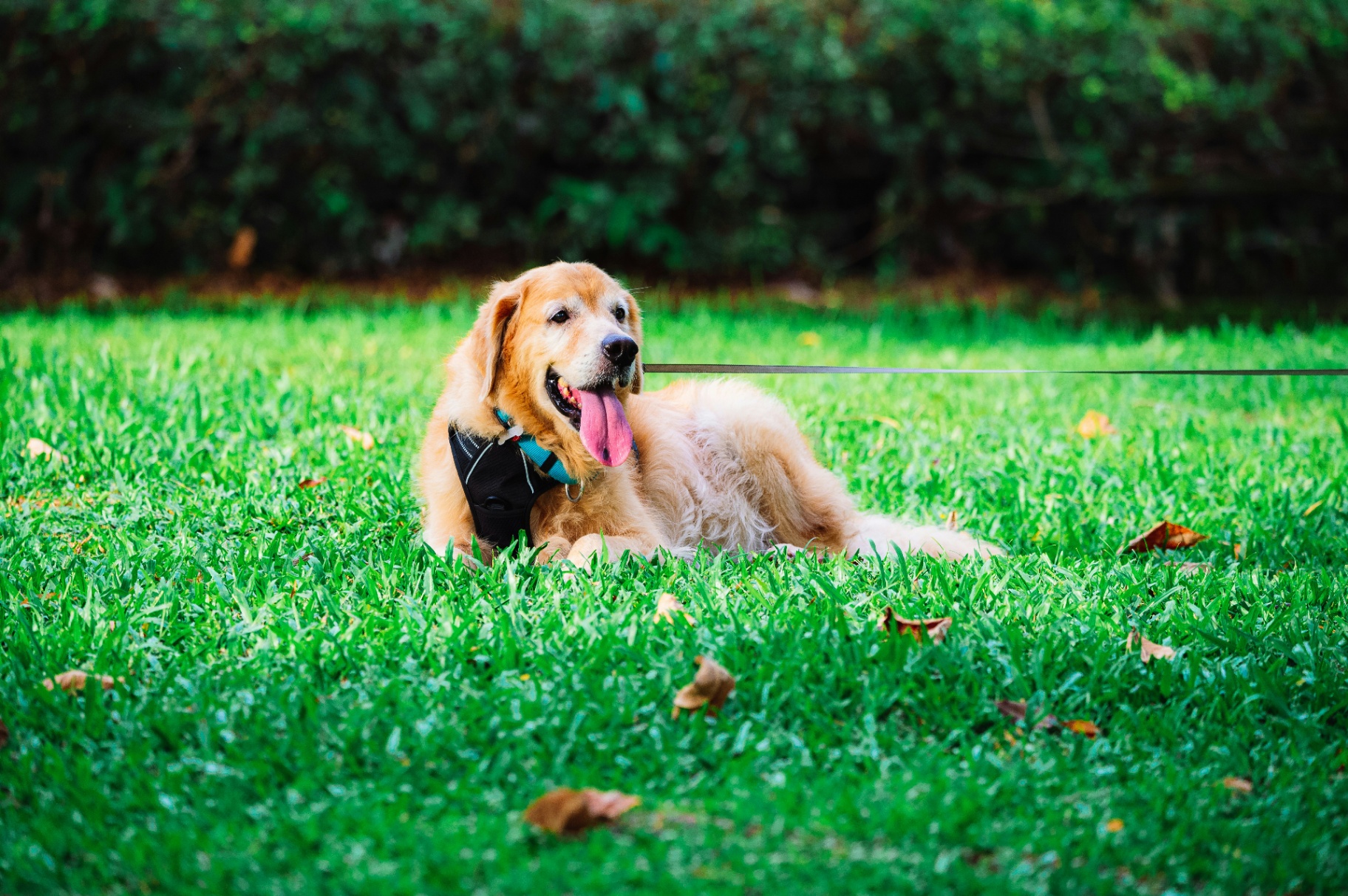
What drives cost differences within the same procedure
For the same procedure at similar-quality clinics, three factors move the bill: (1) geographic, coastal metros run 30–50% higher than Midwest and Southeast; (2) pre-anesthetic workup extent, some clinics include chest films and echocardiograms on all seniors, others don't; (3) post-op care, a 3-day ICU stay after major surgery adds $1,200–$3,000 vs same-day discharge on smaller procedures. Insurance reimburses actual cost, so the location premium and workup extent get passed through in your payout too.Anesthesia risk for goldens: what pre-op workup is worth
Overall canine anesthetic mortality sits around 0.17% per the landmark ACVAA (American College of Veterinary Anesthesia and Analgesia)-cited CEPSAF study, but the risk is not distributed evenly. Seniors, dogs with subvalvular aortic stenosis (a recognized golden retriever predisposition), and dogs with unrecognized kidney or liver compromise sit meaningfully above baseline. For a golden over 7, or any golden with a heart murmur graded II/VI or higher, the pre-anesthetic workup is genuinely worth the $200–$600 it adds to a routine procedure.
A defensible pre-op workup for a senior golden includes: full CBC and chem panel, chest radiographs, and, if any cardiac finding, a pre-op echocardiogram. All reimbursable under comprehensive plans when tied to a covered surgical claim. The workup is not just risk mitigation; catching an occult renal or cardiac issue pre-op can change the anesthesia protocol and prevent a $4,000–$8,000 ICU stay. See senior coverage math for how this factors into renewal pricing.
Post-op complications: the second bill nobody quotes
Surgical estimates quote the procedure. They almost never quote the complications, which per ACVS (American College of Veterinary Surgeons) published outcome data occur in 6–14% of major orthopedic cases and 8–20% of major abdominal cases depending on procedure. The most common: surgical site infection ($400–$1,500 to treat), implant failure or loosening on TPLO/THR ($2,000–$5,000 revision), incisional dehiscence ($600–$1,800 re-closure), and anesthesia-related aspiration pneumonia ($1,500–$4,000 hospitalization).
Insurance treatment: complications of a covered surgery are typically covered under the same policy year, subject to the annual limit. This is another argument against the $5K annual cap, a $6,500 TPLO plus a $3,000 infection revision plus $1,800 of rehab hits $11,300 in a single year on a single leg. On a $10K unlimited plan you're covered; on a $5K capped plan you eat the last $6,300 out of pocket. Full 2026 plan structure comparison in the cost guide.
Breed-specific cost drivers for golden retrievers
Every insurance and cost decision for a golden retriever should be filtered through four breed-specific risk factors that underwriters already price in and that owners should plan around when evaluating golden retriever surgery costs: a complete 2026 breakdown:
- Cancer risk near 60% lifetime, the highest of any AKC-registered breed per the Morris Animal Foundation Golden Retriever Lifetime Study. Hemangiosarcoma, lymphoma, mast cell tumors, and osteosarcoma dominate. Treatment courses commonly run $8,000–$15,000, making annual payout caps under $10,000 functionally inadequate for the breed.
- Hip and elbow dysplasia at roughly 20% per OFA screening data. Environmental factors (puppyhood weight, growth-plate-era exercise pattern) modulate the genetic base rate. Surgical treatment ranges from FHO at $3,500 to bilateral total hip replacement at $12,000–$17,000.
- Bloat / GDV risk elevated by deep-chest anatomy, roughly 5% lifetime incidence. Surgical correction plus 3–5 day ICU stay averages $4,000–$8,000 and is nearly always emergency care with no scheduling flexibility.
- Atopic dermatitis and allergies at 2.3× the canine average. Chronic condition with lifelong management cost of $500–$3,000/year in well-controlled cases. The highest-frequency pre-existing exclusion category for the breed when owners delay enrollment.
The value calculation
The break-even point for pet insurance on a golden retriever sits at roughly $850–$1,100 in annual vet spend on a mainstream comprehensive plan. Given the four risk factors above, most goldens cross that break-even line at least twice in a 12-year lifetime, and often generate a single-event claim (cruciate repair, cancer treatment, or hip surgery) that alone exceeds three years of premium. The actuarial math genuinely favors insured owners for this breed, which is why most major carriers applies a breed-loading factor to golden retriever policies rather than declining to cover the breed.
Whichever specific insurance and care decisions you make, run them against the actual claim distribution rather than a hypothetical average: cancer alone accounts for roughly 40% of golden retriever mortality, orthopedic conditions generate the highest claim frequency, and chronic allergies produce the largest number of recurring low-dollar claims. A plan that handles all three well is the baseline; anything less is functionally under-coverage for the breed.
People also ask
How much does surgery cost for a golden retriever?
$300 (neuter) to $8,500 (total hip replacement per side). Most single procedures fall in the $1,500–$6,500 range. Multi-procedure or complex cases (bilateral orthopedic, cancer with multi-modal treatment) can exceed $15,000.Does pet insurance cover TPLO surgery?
Yes on all comprehensive plans, subject to the orthopedic waiting period and non-pre-existing status. TPLO is one of the highest-frequency reimbursed surgical claims for golden retrievers.How does pet insurance reimbursement work for surgery?
You pay the vet in full, submit invoice and medical records to your insurer, and receive reimbursement (typically 70–90% of the bill minus your deductible) via direct deposit in 5–14 days. First-time claims can take 3–4 weeks if full medical records review is required.Is specialty surgery worth it for a golden retriever?
For orthopedic (TPLO, THR), oncologic, or complex thoracic surgery, yes, outcome differences vs general practice are significant enough that veterinary consensus favors referral. For routine mass excision or foreign-body surgery, general practice is typically equivalent.Are there any surgeries pet insurance won't cover?
Cosmetic procedures (ear cropping, tail docking), breeding-related (elective C-section for planned litter), experimental treatments not in mainstream veterinary practice, and any surgery for a pre-existing condition. Everything else is generally covered under comprehensive plans.Related articles
- Golden Retriever Insurance Cost by Age: Puppy to Senior
- My Golden Retriever Already Limps: Can I Still Get Insurance?
- Best Pet Insurance for a Golden Retriever Puppy (2026)
- Golden Retriever Hip Dysplasia Surgery Cost: The 2026 Reality Check
- The Real Cost of Cancer Treatment for Golden Retrievers: A Founder's Guide
Golden retriever insurance by state
Tools & resources
Legal disclaimer & advertising disclosure
This article is general information, not insurance, veterinary, financial, or legal advice. Costs and reimbursement examples are illustrative estimates, not quotes or guarantees of coverage, and terms vary by insurer, policy, and state. Review your own policy documents before deciding. We are not an insurer or a licensed insurance agency, and our research is non-binding.
Advertising disclosure: some links are affiliate links and we may earn a commission at no cost to you, which never influences our editorial conclusions. See our editorial policy and full disclaimer.